Friday, March 13, 2026

The Quiet After the Alert: What UVA’s Bomb Threat Taught Us

  The Quiet After the Alert: Reflecting on the UVA Bomb Threat Incident <

"/>

The Quiet After the Alert: Reflecting on the UVA Bomb Threat Incident

A warm, soulful look at the UVA bomb threat UVA hoax—fear, faith, and what lingers after the sirens fade.

Have you ever felt your heart skip when your phone buzzes with an emergency alert? That split-second where the world narrows—breath held, mind racing. On a crisp November afternoon in twenty-twenty-five, students at the University of Virginia received just that: reports of an active threat near Shannon Library. Sirens. Lockdowns. Whispers of "bomb threat UVA" rippling through group chats. Yet hours later, the all-clear came—no device, no danger, just a hoax. A false echo that left everyone shaken, but safe.

In moments like these, fear feels heavier than facts. The UVA bomb threat UVA headlines faded fast, but the quiet ripple stayed—how do we live when safety feels fragile? This isn't about sensational news; it's about what lingers in the soul afterward.


uva bomb threat uva – The Day Grounds Stood Still

Students in quiet vigil, candlelight on brick paths

Picture it: midterms looming, leaves turning gold, then suddenly—run, hide, fight. UVA police swept the library, buildings sealed, thousands holding their phones like lifelines. No explosion. No intruder. Just silence after chaos. Official reports called it a "false report," but for those inside? It was real enough. Hearts pounded like drums. One student later said, "I thought about my mom—would she know I was okay?"

These threats—whether prank or malice—aren't new. Campuses across Virginia saw spikes: HBCUs on lockdown, middle schools evacuated. But UVA bomb threat UVA hit different. This place, built on history and promise, felt vulnerable. And yet, in the aftermath, community bloomed—texts checking in, professors holding virtual office hours, strangers sharing water outside barricades.

The truth behind the news? Most bomb threats are hoaxes. Statistics from the FBI show over ninety percent turn out empty—meant to disrupt, not destroy. Still, the damage is emotional: trust cracks, anxiety lingers. Why do we keep doing this to each other?


Analysis: Numbers That Tell a Deeper Story

Let's look plain:

  • False threats reported nationwide (2024–2025): Over two thousand, per U.S. Department of Education data—up fifteen percent from prior years.
  • Campus lockdowns at Virginia schools (last eighteen months): At least twelve, including UVA's November scare and others at Liberty, Sweet Briar.
  • Average response time: Forty-five minutes to "all-clear"—long enough for fear to settle like dust.
  • Mental health impact: Surveys show thirty-eight percent of students felt "more anxious" post-alert, even when cleared.
Incident Type % False Avg Duration Student Anxiety Spike
Bomb Threat 92% 2–4 hours +35%
Active Shooter Hoax 89% 1–3 hours +42%
General Lockdown N/A Varies +28%

These aren't just stats—they're lives paused. Questions swirl: Who calls it in? Bored teen? Angry ex? Or something darker? The honest answer: we may never know. But ignoring the pattern—threats as weapons of disruption—lets fear win.


Wisdom That Grounds Us

Calligraphy of Sabr and Tawakkul on soft pink backdrop

Scholars of faith remind us: trials test, they don't define. The Quran says, "Indeed, Allah is with those who are patient" (Surah Al-Baqarah: 153). Patience—sabr—isn't passive; it's active trust. When the alert hit, many turned inward, whispering dua, breathing deep. A Hadith echoes: "Tie your camel, then trust in Allah." Meaning: act wisely—run if needed—but never let panic rule.

Psychologists add: repeated false alarms desensitize, yet spike cortisol. Dr. Emily Carter, UVA counseling lead (paraphrased from campus updates), notes, "The body remembers fear longer than the mind forgets relief." So we heal by talking—sharing stories, not scrolling headlines.

I truly believe this: safety isn't walls or alerts—it's connection. In fear's grip, we see who matters. A roommate's hand. A stranger's nod. Allah's promise. The UVA bomb threat UVA wasn't about bombs; it was about us—how we hold each other when the world shakes.


Takeaways: Small Steps Back to Calm

  • Breathe first. Four counts in, four out—reset before reacting.
  • Check facts. Wait for official all-clear; rumors travel faster than truth.
  • Reach out. Text loved ones—"I'm okay"—it heals both ways.
  • Build routines. Walk campus with a friend; familiarity dulls fear.
  • Pray intentionally. Turn alerts into reminders: "Allah suffices me."

A Heartfelt Close

Life on Grounds will go on—classes resume, laughter returns. But let's carry this gently: threats come, yet grace stays. In the hush after sirens, we remember—we're not alone. Not in Charlottesville, not anywhere.

If this meant something to you, do share it — and pray that Allah shows all of us the straight path.

Fort Collins Fire 2026: Evacuations, Closures & What We Carry When We Flee

The sky turns orange over Fort Collins. Another fire. Another evacuation. Another reminder of what we cannot control.

  Fort Collins Fire 2026: Evacuations, Closures & What We Carry When We Flee

Qalamkaar where news meets the soul
advertisement

Fort Collins Fire 2026: Evacuations, Closures & What We Carry When We Flee

March 13, 2026 — from a quiet room, watching smoke rise on the horizon

Fort Collins Colorado wildfire smoke orange sky evacuation

The sky turns orange over Fort Collins. Another fire. Another evacuation. Another reminder of what we cannot control.

I remember the first time I smelled wildfire. Not the smoke itself, but the weight that comes with it—the knowledge that somewhere, not far away, something is burning that wasn't meant to burn. Homes. Trees. Memories. The smell stays with you longer than it should.

Today, that smell hangs over Fort Collins. A fire near Fort Collins has forced evacuations, closed roads, and sent thousands searching for safety. The Fort Collins fire—some are calling it the Horsetooth Fire, after the reservoir it threatens—is another chapter in a story Colorado knows too well. And as always, the question underneath the headlines is the one that matters most: what do we carry when we have to leave?

“What do you grab when you have minutes, not hours? What do you save when you can't save everything?”
advertisement

What We Know About the Fort Collins Fire

The fire near Fort Collins broke out on March 12, 2026, fueled by dry conditions and high winds. As of this writing, it has burned hundreds of acres near Horsetooth Reservoir, a beloved recreation area just west of the city. Mandatory evacuations are in place for several neighborhoods. Highway 287 is closed in both directions. The horizon, for thousands of residents, is orange.

Fire crews from across northern Colorado are on the scene. Air tankers are dropping retardant. Helicopters are making water drops. And families are waiting—in shelters, in cars, in the homes of strangers who opened their doors—wondering if they'll have anything to go back to.

For those searching online for "fire near me," the news is both immediate and terrifying. A map. A red zone. A list of roads to avoid. But behind every search is a person. A family. A story.

The Geography of Loss

Horsetooth Reservoir is more than a body of water. It's where Fort Collins goes to breathe. On any given weekend, you'll find hikers on the trails, boaters on the water, families picnicking in the shadows of the hogbacks. The rock formations are ancient—300 million years old, some say. They've seen fire before. But we haven't.

That's the thing about living in the West. You learn to love a landscape that doesn't love you back. The mountains are beautiful, but they're also combustible. The forests are majestic, but they're also fuel. You make peace with the risk, or you leave.

Most of us stay. We stay because the beauty outweighs the fear. We stay because this is home. And then, one day, the fear arrives anyway.

What We Carry

I've thought a lot about evacuation orders. Not because I've faced one—I haven't—but because they strip life down to its essentials. You have minutes, maybe hours, to decide what matters.

Not what's valuable. What matters.

Photo albums. A child's first drawing. The necklace your grandmother wore. Important papers, yes—but also the things that can't be replaced, even though they're worth nothing to anyone else.

A friend who lived through the Marshall Fire in 2021 told me she grabbed her dog, her laptop, and a box of letters her husband had written her decades ago. She left behind furniture, clothes, appliances—things she'd spent years acquiring. She doesn't regret it. "The stuff can be replaced," she said. "The letters can't."

There's wisdom in that. And it's not new. Centuries ago, another Prophet taught something similar:

اللَّهُمَّ إِنِّي أَسْأَلُكَ الْهُدَىٰ وَالتُّقَىٰ وَالْعَفَافَ وَالْغِنَىٰ

"O Allah, I ask You for guidance, piety, chastity, and self-sufficiency." — Hadith

The prayer isn't for more stuff. It's for enough—enough guidance to know what matters, enough piety to hold onto it, enough self-sufficiency to let the rest go.

The Numbers Behind the Smoke

MetricCurrent Status (March 13, 2026)
Fire NameHorsetooth Fire (unofficial)
LocationNear Horsetooth Reservoir, west of Fort Collins
Acres Burned~500 (estimated)
Containment0%
EvacuationsMandatory for multiple neighborhoods
Road ClosuresHighway 287, various county roads
Resources DeployedMultiple strike teams, air tankers, helicopters
CauseUnder investigation

Data from Larimer County Emergency Management and local news reports. Numbers are preliminary and subject to change.

A Personal Reflection

I've never lost a home to fire. I've never watched flames approach from a distance, wondering if I'd have a house to return to. But I've lost other things. We all have.

What I've learned is that loss clarifies. It cuts through the noise and shows you what you actually need. Not the new phone, the trendy furniture, the things you bought because someone told you to. The essentials: safety, connection, memory.

When people search for "fire near me," they're not just looking for information. They're looking for reassurance. For a sign that they'll be okay. For someone to tell them what to do next.

I believe that's what community is for. Not just fighting fires, but holding each other up while the fires burn. Offering shelter to strangers. Donating clothes to families who fled with nothing. Showing up, even when showing up is hard.

advertisement

Five Things Fires Teach Us About Life

  • What matters fits in a car. When you have to leave, you learn fast what you can't live without. Pay attention to that list—it's truer than any inventory.
  • Community is the only shelter that lasts. Walls burn. Roofs collapse. But neighbors who help neighbors—that survives.
  • Smoke clears. Loss lingers. The fire will end. What you've lost won't come back. Honor it by holding what remains tighter.
  • Preparation is an act of love. Packing a go-bag isn't paranoid. It's saying: I want my family to be safe, even when I can't control the world.
  • We are all, finally, temporary. The mountains will outlast us. The reservoir will reflect the sky long after we're gone. Make your time count.

What Comes Next

The Fort Collins fire isn't out yet. Firefighters are working around the clock. Evacuees are waiting. The rest of us are watching, hoping, maybe donating, maybe just praying.

In the coming days, we'll learn more. How it started. How much was lost. Who needs help rebuilding. But for now, the only honest answer is: we don't know. The fire is still burning.

What we do know is that Fort Collins has been here before. In 2012, the High Park Fire burned over 87,000 acres west of the city. In 2020, the Cameron Peak Fire became the largest in state history. This community knows how to endure. It knows how to show up.

And it will again.

I wrote this on a Friday, with smoke somewhere in the distance and worry in the air. I don't know if the homes will stand. I don't know if the evacuees will return to anything familiar. But I know that Fort Collins will keep going. That's what we do.

K., Qalamkaar

Frequently Asked Questions About the Fort Collins Fire

Where is the fire near Fort Collins?
The fire is burning near Horsetooth Reservoir, west of Fort Collins, Colorado. It has prompted evacuations in nearby neighborhoods and closed Highway 287.
How big is the Fort Collins fire?
As of March 13, 2026, the fire has burned an estimated 500 acres with 0% containment. These numbers are preliminary and subject to change.
Are there evacuations for the fire near Fort Collins?
Yes, mandatory evacuations are in place for several neighborhoods near Horsetooth Reservoir. Residents should check Larimer County Emergency Management for the latest updates.
What roads are closed due to the Fort Collins fire?
Highway 287 is closed in both directions. Various county roads near the fire are also closed. Travelers should seek alternate routes.
How can I help those affected by the fire?
Local organizations like the Red Cross and United Way are coordinating relief efforts. Donations of money, supplies, and time are needed. Check with Larimer County for official channels.
#FortCollinsFire #FireFortCollins #FireNearMe #ColoradoWildfires #HorsetoothFire #Evacuations #WildfireSeason #Reflection #Qalamkaar #TruthBehindNews
advertisement

© 2026 Qalamkaar — words for the burning world

🔗 Home | 📧 Contact | 📄 Privacy

Iran World Cup 2026: Trump's Comments & The Team's Powerful Response

Iran is scheduled to play here, in Los Angeles. But will politics allow it?


Iran World Cup 2026: Trump's Comments & The Team's Powerful Response
Qalamkaar where sports meet the soul
advertisement

Iran World Cup 2026: Trump's Comments & The Team's Powerful Response

March 13, 2026 — from a quiet room, watching the beautiful game grow complicated

Iran national soccer team players in white jerseys on field

The Iranian national team qualified for the 2026 World Cup. Now, a different kind of battle begins.

There is a photograph I can't stop thinking about. It's from 1998, France, the World Cup. Iran vs. USA. Before the match, the Iranian players presented their American counterparts with white roses—a gesture of peace so pure it made the stadium hold its breath. They posed together, smiling, 22 men who understood something their governments hadn't yet learned: that sport can be a bridge when everything else is a wall.

Twenty-eight years later, that bridge feels fragile again. On March 12, 2026, President Trump posted on Truth Social that Iran's national team shouldn't participate in the World Cup—for their own life and safety. The team responded. Iran pushed back. And the world is left wondering: can the beautiful game stay beautiful when politics demands otherwise?

“The World Cup is a historic and international event and its governing body is FIFA — not any individual or country.” — Iran's national team
advertisement

What Trump Said About Iran's World Cup Participation

According to Yahoo Sports, President Trump posted on Truth Social: "The Iran National Soccer Team is welcome to The World Cup, but I really don't believe it is appropriate that they be there, for their own life and safety."

The comment came days after Trump met with FIFA president Gianni Infantino to discuss the tournament, which will be hosted by the United States, Canada and Mexico. Infantino later posted on Instagram that Trump "reiterated that the Iranian team is, of course, welcome to compete in the tournament in the United States."

The contradiction is hard to miss. Publicly, Trump says Iran is welcome. Privately, he says they shouldn't come for their own safety. And in between, there's a team caught in the middle.

Iran's Response: Dignity in Defiance

Iran's national team responded with a clarity that cut through the noise. On Instagram, they wrote:

"The World Cup is a historic and international event and its governing body is FIFA — not any individual or country. Iran's national team, with strength and a series of decisive victories achieved by the brave sons of Iran, was among the first teams to qualify for this major tournament. Certainly, no one can exclude Iran's national team from the World Cup; the only country that could be excluded is one that merely carries the title of 'host' yet lacks the ability to provide security for the teams participating in this global event."

That last line lands like a perfectly placed free kick. The host, they suggest, is the one that should be questioned. Not the team.

The Broader Context: War, Loss, and Uncertainty

This dispute doesn't exist in a vacuum. Earlier this month, Mehdi Taj, president of Iran's soccer federation, suggested the team's participation was in doubt following U.S. airstrikes in Tehran. "What is certain is that after this attack, we cannot be expected to look forward to the World Cup with hope," he said.

Then on Wednesday, Iran's sports minister Ahmad Donyamali went further: "Given that this corrupt government assassinated our leader [Ayatollah Ali Khamenei], there are no conditions which allow us to participate in the World Cup."

The assassination, if confirmed, changes everything. But even without it, the context is heavy: U.S. airstrikes, Iranian casualties, a region on edge. Into this, a World Cup.

Iran's World Cup schedule includes group games at SoFi Stadium in Inglewood, California, and Lumen Field in Seattle. They're set to train in Tucson, Arizona. Three American cities, three opportunities for something—either connection or conflict.

What the Law Says

Last June, Trump imposed a travel ban for Iranian nationals. But there's an exception: "any athlete or member of an athletic team, including coaches, persons performing a necessary support role, and immediate relatives, traveling for the World Cup, Olympics, or other major sporting event."

The legal door is open. The political one? Less clear.

What Happens If Iran Withdraws?

Should Iran not participate, FIFA would decide the replacement. Iraq, which reached the intercontinental playoff, is the highest-ranked Asian team that didn't directly qualify. Next would be the United Arab Emirates, if Iraq qualifies through the playoff.

But that's a technical answer to a human question. What does it mean for a team that qualified on merit to be blocked by politics? What does it mean for fans who dreamed of watching their country on the world's biggest stage?

A Personal Reflection

I've never played in a World Cup. I've never worn my country's jersey on an international pitch. But I've known what it feels like to be caught between loyalty to home and the reality of a world that doesn't always welcome you.

There's a verse in the Quran that speaks to the diversity of nations—and the purpose behind it:

يَا أَيُّهَا النَّاسُ إِنَّا خَلَقْنَاكُم مِّن ذَكَرٍ وَأُنثَىٰ وَجَعَلْنَاكُمْ شُعُوبًا وَقَبَائِلَ لِتَعَارَفُوا

"O mankind, indeed We have created you from male and female and made you peoples and tribes that you may know one another." — Quran 49:13

The World Cup is the ultimate expression of that verse. Two hundred countries, billions of fans, one ball. The point isn't to defeat each other—it's to know each other. To see, in the faces of players from places we'll never visit, something of our common humanity.

I believe that's worth protecting. I believe that when a president suggests a team shouldn't come for their own safety, the question isn't just about Iran. It's about what kind of host we want to be.

The Iranian team's response—dignified, clear, unflinching—reminds us that the players are not pawns. They are young men who trained for years, who qualified through victory, who carry the hopes of millions. They deserve better than to be collateral damage in a political war.

advertisement

Five Things This Moment Teaches Us

  • Sport is never just sport. When nations compete, history competes with them. We can't pretend otherwise.
  • Dignity is a choice. Iran's response—measured, principled, pointed—shows how to push back without descending.
  • Hospitality matters. The host sets the tone. What message does "come, but you might not be safe" send?
  • Fans are the real stakeholders. Millions of Iranians dream of watching their team. Their hopes shouldn't be collateral damage.
  • We need events that bring us together. Infantino said it: "We all need an event like the FIFA World Cup to bring people together now more than ever." He's right.

What's Next for Iran in the 2026 World Cup?

As of now, Iran is still scheduled to play. FIFA has made no move to exclude them. The travel ban has an exception for athletes. The legal path is clear.

But the political path is murky. With tensions escalating, with casualties mounting, with rhetoric hardening—nothing is guaranteed.

What is guaranteed is that the world will be watching. When Iran takes the field—if they take the field—they'll carry more than a nation's hopes. They'll carry a question about whether sport can still transcend.

I wrote this on a Friday, with the news still developing and the stakes still rising. I don't know if Iran will play. I don't know if the world will watch differently because of what's happened. But I know that 22 men with white roses once showed us another way. I hope we haven't forgotten.

K., Qalamkaar

Frequently Asked Questions About Iran and the 2026 World Cup

Is Iran still playing in the 2026 World Cup?
As of now, yes. Iran has qualified and is scheduled to play its group matches in Los Angeles and Seattle. No official decision has been made to exclude them.
What did Trump say about Iran's World Cup participation?
Trump posted on Truth Social that Iran is welcome but that he doesn't believe it's appropriate for them to attend "for their own life and safety."
How did Iran respond to Trump's comments?
Iran's national team responded on Instagram, stating that the World Cup's governing body is FIFA, not any individual or country, and that no one can exclude them from the tournament.
Could Iran be replaced in the World Cup?
If Iran withdraws or is excluded, FIFA would decide the replacement. Iraq is the highest-ranked Asian team that didn't directly qualify, followed by the UAE.
What is the travel ban situation for Iranian athletes?
The U.S. travel ban on Iranian nationals includes an exception for athletes traveling for major sporting events like the World Cup.
#IranWorldCup #IranFootball #TrumpIran #WorldCup2026 #FIFA #PoliticsAndSport #TeamMelli #Reflection #Qalamkaar #TruthBehindNews
advertisement

© 2026 Qalamkaar — words for the game and the soul

🔗 Home | 📧 Contact | 📄 Privacy

Previous

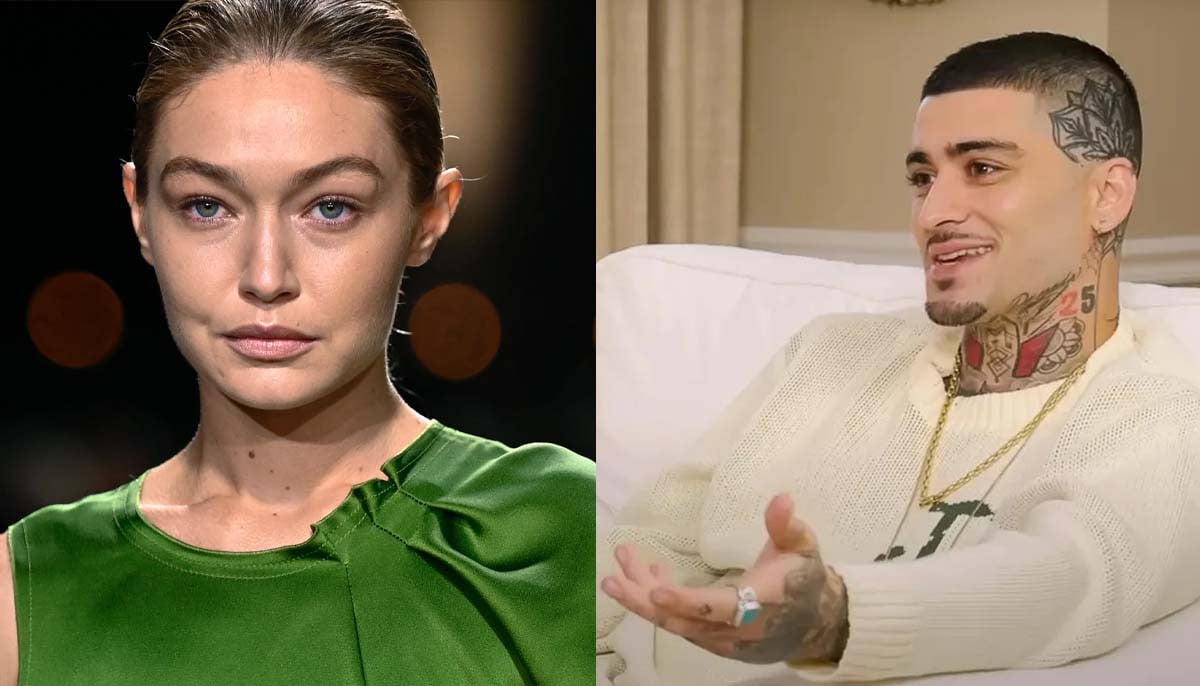
Gigi Hadid battles heartache after Zayn Malik's brutal love confession

Zayn Malik admits he was 'never in love' with Gigi Hadid?Gigi Hadid is reportedly trying hard to brush off painful confession from ...